Showing posts with label Germany. Show all posts

Thursday, October 1, 2015

Ein Prosit, ein Prosit ...

IMG_5116
Last year, on the first weekend of October, I flew to Munich with a big group of friends. We had been planning this trip since June.
IMG_5119
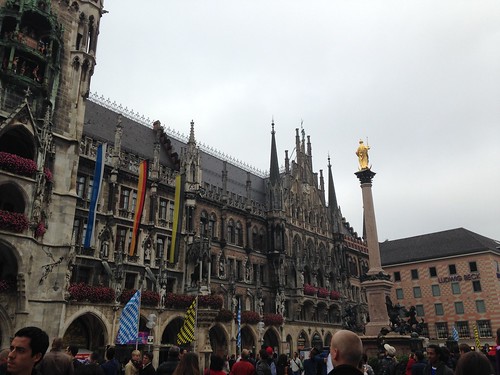
We saw monuments and the cathedral - the only pre-war building remaining (Munich was nearly razed flat by British bombs).
IMG_5114
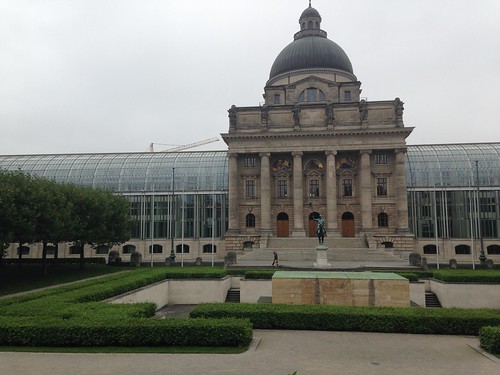
We saw beautiful gardens, despite the gloomy weather that was a world away from bright, sunny Barcelona.
IMG_5104
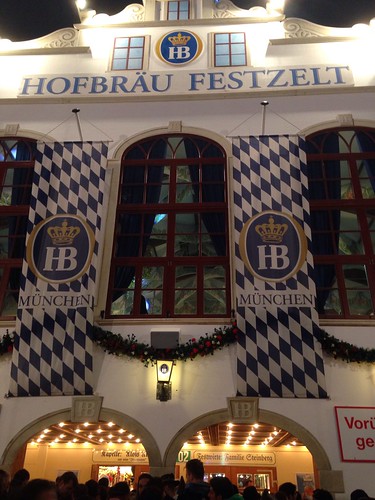
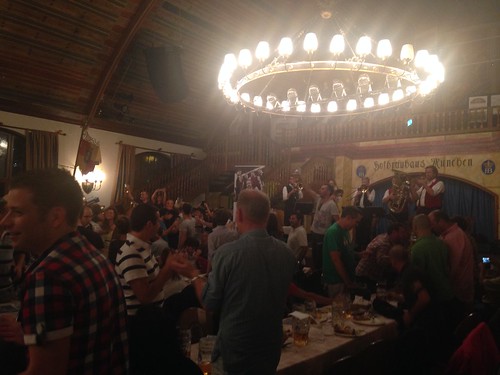
But really, we were here for this. To experience the madness of Oktoberfest.
IMG_5095
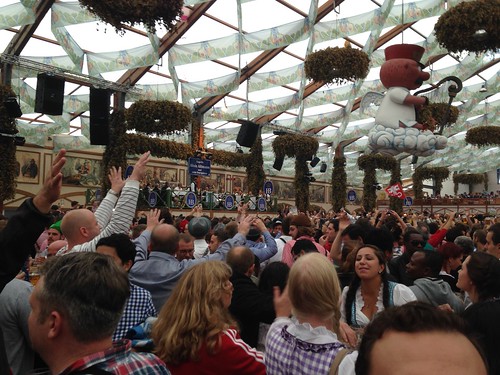
And what madness it was.
IMG_5103
We brought a little bit of Catalunya with us to Bavaria ...
IMG_5053
... but amidst the haze and singing ...
IMG_5049
... toasting and napping ...
IMG_5062
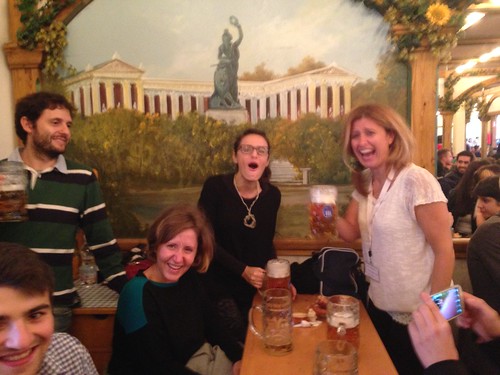
... we decided it would be more fun to make some new friends ... 
IMG_5070
... and begin accumulating Maß ...
IMG_5124
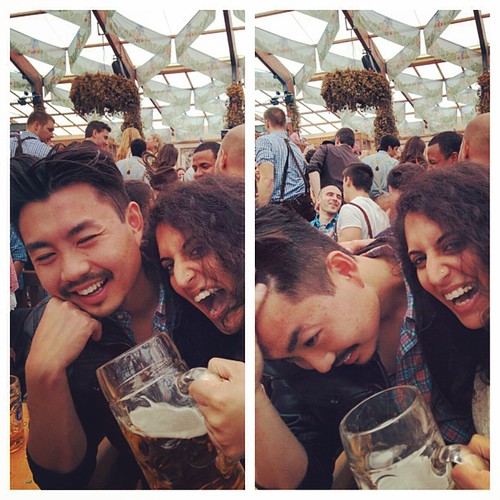
... after Maß after Maß ...
IMG_5106
... until we (I) had drunk ourselves to oblivion. Ein Prosit, ein Prosit, Der Gemütlichkeit!! What a trip.
DF

Tuesday, March 25, 2014

brevity

DSC_1707DSC_1709DSC_1710
Beer is good. German beer, even more so. Man, I'm so behind, and when I actually get to sorting out the photos, going over notes again, I lose interest and don't even bother actually writing about the bottles. It's all good though. My drinking life doesn't revolve around tasting notes. 

So, German beers from El Corte Ingles. Decent selection, I suppose, but it's all relative. Good, solid, satisfying brews - nothing terribly exciting, but like a good hug from an old friend, something to soothe the soul. 

Just like that, our short break is over. Second term ended last Friday, with the final 2 exams. Confident about how I performed? We all know the answer to that one, so yeah, let's move on. I tried my best though. A nice, relaxing weekend of going out to brunch, enjoying the weather, going for long runs by the beach ... fantastic. Got some culture too, seeing the Le Corbusier exhibit at the Caixaforum. Spent some time with buddies outside of class (finally!), and got to know some classmates better as well. And yes, drank copious amounts of gin cocktails. A long day today, dragging myself out of bed on 3 hours of sleep to go to campus, to film a video promoting the exchange program here. A fun day of shooting, and really, really excited to see the results. Will post it as soon as it's completed. Let's make me a Youtube star chicos

Is the worst behind us? Can I finally focus a bit, and figure out a plan to get a summer internship? Let's get it on!

DF

Thursday, August 15, 2013

back to what's so comforting

DSC_1451
1992 Max Ferd. Richter Riesling Spätlese | QmP Mülheimer Sonnenlay | Mosel-Saar-Ruwer

We all have our own personal barometer of what style is, what comfort is, what taste is ... and anything not adhering to those personal standards is too often dismissed as wrong/bad/ugly/stupid/tacky. We all want to think of ourselves as having good taste - we all think of ourselves as having it. But that's altogether a far too one-dimensional view of things. Too many people are too quick to judge and it's becoming tiring to hear it, it really is. Why can't we all just be different, and be celebrated for liking different things? You should never have to defend your taste in things, in preferring certain things ... your preferences are simply what they are. It's easy to judge; it's far harder to accept things that are different.

I love Mosel riesling. I've loved it the first time I had a sip. There's an absolute honesty to these wines. And truth be told, I find I get along best with people who also appreciate them. You can always tell, when you serve Mosel to someone for the first time - there are those who are open to trying something new, and others who scrunch their faces at 'oh, it's a sweet wine'. Because after all, how can you be serious about wine if it's not a dry red wine?! Oops. Guess we can't be friends.

This, the Max Ferd. Richter, my last bottle from a bunch I bought way, way back. The Germans sulfur the hell out of their wines, making them relatively immortal. Quite a bit of bottle variation, but this one was fabulous. Open and expressive, with floral aromas, honey, and green apple. That signature minerality underlying everything, whiff of petrol as well. At full maturity. Good sweetness on the palate, with a lingering, spicy extract, great acidity and length. A delicious wine that is drinking beautifully.

I love these wines because they're delicious and all, but also because they're so comforting. There's no need to explain why I like sweet wines, why the Mosel speaks to me the way it does. I have zero affiliation with Germany or any Germans, but how come these wines taste of home? 

Spent the day downtown today. Toronto is home and I love living here, but goddamn, this city is boring. Nothing to do. So grabbed a peameal bacon sandwich at St. Lawrence Market, picked up some vegetables and steak to bring home, and called it a day. Champagne, Barolo, and Carema tonight, the last few bottles in the cellar. 

DF

Friday, August 2, 2013

a contrast in dry and sweet Mosel

DSC_1405DSC_1406
Top: 2010 Maximin Grünhäuser Riesling Trocken | QbA Mosel
Bottom: 2009 Bollig-Lehnert Riesling Auslese | QmP Dhroner Hofberger | Mosel

What's your pleasure, what's your mood tonight? Dry? Or something sweet?

Why not both.

Mosel riesling is my love, my true love, a fire that will never be extinguished. And here, two examples of how diverse riesling can be, yet show that same familial character. First, the trocken, from Maximin Grünhäuser. As described by its U.S. importer Chambers & Chambers Wine Merchants

The estate’s entry-level dry wine shows fine, fresh fruit, with a spicy edge.

The estate Riesling Trocken (dry) is a blend of the barrels that remain after the singlevineyard dry wines have been selected out of the overall production. This is a topdown selection process done purely by taste. It starts with the finest selection for the “Superior” bottlings, then the Alte Reben (old vines) wines from Abtsberg and Herrenberg, the single-vineyard QbA Trocken wines, and finally the estate QbA Trocken. In most years, this wine is predominantly from the Herrenberg vineyard, but the proportions will change depending on the vintage. The result is an entry-level dry Riesling that shows the characteristic minerality of the area and the refined style of the Grünhaus estate.

Then at the other end of the spectrum, an auslesen from a producer we've been seeing a lot of in Ontario, Bollig-Lehnert. From their own website, this description of the vineyard:

Dhron-Hofberger: Londitude 6° 55″ 42″ E / Latitude: 49° 52″ 46″ N

Tucked away in the valley of Dhron lie the exceptional vineyards of the Dhron-Hofbeger – perfect weather and climate conditions make this small wine-growing area a Gem!..the rather less known Dhroner wines offer the drinker a full-bodied but elegant, rich Riesling wine with a touch of acidity.

Two very different wines. The trocken, showing impeccable balance and minerality, a lovely lifted palate, pure elegance and precision. The auslesen, a powerhouse, yet lithe on its feet. Lebron James doing a pirouette. Yet both wines show the focus and intensity of riesling, that beautiful mineral profile and harmony on the palate. Lovely, stunning wines.

DF

Tuesday, June 18, 2013

comfortable in your arms

DSC_1264
2005 August Kesseler Riesling Spätlese | QmP Rüdesheimer Bischofsberg | Rheingau
DSC_1267
2011 Studert-Prüm Riesling Kabinett | QmP Graacher Himmelreich | Mosel

It feels so good to be in your arms - your warm embrace, your soft, feminine touch, the fragrance emanating out of every pore of your being. You're comforting, nurturing, seductive. I can't get you out of my mind. You rock my world yet remain an enigma, defying labels and generalizations. Just when I think I start understanding, getting it, you throw something new at me and I start all over again. But I love it like that. Keeps me on my toes.

From the Rheingau to the Mosel, two wines that challenge what you think you know about German riesling. The August Kesseler, a wine that blends sensuality and steeliness, a femme fatale. Ripe tropical notes, mango and papaya, with a most peculiar and unique floral scent, all underlined with a beautiful layer of dry extract. And the Studert-Prüm, always one of my favourite Mosel wines. Racy and pure, this 2011 Graacher Himmelreich is quite ripe for a kabinett. But again, that underlying acidity and minerality making the wine. Happiness.

So we come to the same question as before - can we enjoy a wine on both a sensual as well as intellectual level? In this case, a resounding yes. These wines give so much pleasure, yet offer such a profound vinous experience ... a perfect wine? Or as close to it in the glass as it gets. It's a wine that the most rudimentary of tasters enjoy - it's also a wine that stimulates and excites the most experienced of us. And yes, riesling works like a charm when you're trying to impress your lady friends. When we drink, we drink first for pleasure. But we also drink because wine elevates us, turns us into travelers, philosophers, poets, and horndogs. Whatever works for you.

DF

Thursday, June 6, 2013

wrapped in its warm embrace

DSC_1197
2007 Dr. Hermann Riesling Spätlese | QmP Urziger Würzgarten | Mosel
DSC_1264
2005 August Kesseler Riesling Spätlese | QmP Rüdesheimer Bischofsberg | Rheingau

My head is spinning a bit. Tired, feeling lazy, raining outside. Spent a day in Niagara yesterday, meeting a lot of new people, tasting a lot of new wines. A great day, and felt very inspired again, but today comes the hangover. I guess I do better with routine, as much as I think of myself as a wild, hedonistic badass. All about balance right? Exhausted after tasting at 4 stops, and hours on the road, but did manage to make it back to Toronto in good time. Went out to an izakaya for a beer and some snacks for a bite, before finishing the last 1/3 of a bottle of vintage port I had in the fridge. It's all about moderation ... besides, I was spitting all day (that's what she said).

When I'm feeling down, when I feel like shit's stacked against me, a glass of a wine that hugs instead of growls at you is the first thing that comes to mind. Actually, no, alcohol isn't top of mind when I'm confronted with problems, but it does help. For my interview with a certain business school in Paris (got my acceptance letter today btw), I was asked to deliver an original presentation. So naturally, I presented my philosophy on wine appreciation; that is, our capacity to enjoy and appreciate wine on both a personal and intellectual level. We experience wine on a very cerebral level, and so of course our mood dictates what and how we drink. And when I'm in a foul temper, I want a wine that embraces and wraps me up in a cocoon of love.

German riesling. 'Nuff said? The Dr. Hermann, showing so open and expressive already for such a tight, structured vintage - all the charm of the Urziger Würzgarten vineyard. The August Kesseler, with ripe, petrol aromas emerging, with a most particular tropical fruit character on the palate (papaya?). Still a baby though, with a long life ahead.

Last day of my week off tomorrow. A lot of housekeeping to be done, and not altogether looking forward to it, but time to get to work. Can't be crying over her forever, right?

DF

Monday, April 29, 2013

waiting for spring showers and sunshine

DSC_1148
1999 Reichsgraf Von Kesselstatt Riesling Spätlese | QmP Piesporter Goldtröpfchen | Mosel

It's been nice to stay at home, get some stuff done. Weather's not really co-operating (it's been drizzling nonstop), but at least it's getting warmer. When you live in Canada, you learn to savour the little things. I love spring, that smell in the air that's full of fragrance and promises of good things coming up. Maybe that rings truer for me this year than any other time in recent memory. It's been a bit frightening, but I've been out of university for 5 years. Man, we thought we were the shit back then, at the age of 22. Reality has a way of taking you down a few notches. So we try to stay motivated, stay hungry. My applications for business school are still unfinished - waiting to interview with one more school, but I expect The Decision to come soon. 

True winos are seasonal drinkers, and as spring ushers in all kinds of new produce, so should the wines that show up on the dinner table. Fresh, vibrant wines, that mirror the energy happening outside. Riesling? Shit, riesling is good year round, but in this wino's opinion, especially delicious this time of year. And these mature ones with a decade or so of age ... close to paradise. Balanced yet showing developed aromas of apple and honey, all underlined with minerality and vibrant acidity. Slightly drying out, almost a touch of oxidation, but drinking beautifully now, and close to its peak. This producer's wines are always quite rich, and certainly very ripe, but what carries it is its dry extract on the palate which gives it texture and weight.

I'm savouring this slow crawl to spring, as I do believe it's going to be my last one in Toronto for a while. No rush at the moment - simply content to enjoy everything as it comes. 

DF

Wednesday, February 20, 2013

reduction, sponti, and all sorts of fun

DSC_1019
2005 Bollig-Lehnert Riesling Auslese | QmP Piesporter Goldtropfchen | Mosel

So I drink a fair amount of riesling, and like to think that I have a good idea of what the various styles are, what the various villages are generally like. And then I start reading a few articles about it from actual authorities on the subject, and I realize how ignorant I am, how much I have yet to learn.

The Mosel and Rheingau are the two regions I've had the most opportunities to taste mature vintages from, going back to the early '80's. I've never been really shy about sharing how I feel about these wines - riesling certainly being one to induce a bit of hyperventilating. These wines are so, so special, and as I've said again, and again, so much more than what their reputation suggests. I've had three bottles from this producer in the last few months, and I've come to get a sense of their style. The first two, a spätlese from Piesporter Goldtropfchen, and a kabinett from Trittenheimer Apotheke, showed as incredibly reduced. Throwing off aromas that I immediately associated with sulfur and reduction - until I learned that there's more to it. Much more.

First, an article by Lars Carlberg called Unlocking the Kabinett, and a blog post by Brooklynguy called  Weird Things About Wine #61 - Mosel and the Sulfur Stench (read the comments). Certain off aromas in riesling - mostly young riesling - comes from a variety of things. Reduction and aromas of sulfur may not be related. And there's another wrinkle, from wines fermented using native yeasts, referred to as sponti. Peter Liem, the esteemed wine writer, says that tasted against one other, each type of aroma is fairly distinct from one another. We need to clearly differentiate between the three, because the causes of each are distinct, and therefore the way we need to treat the wines will differ.

Right, so because none of us are chemists and chemistry is boring, let's dumb it down and describe each as it is. Reduction can occur from sulfur use, or be an effect of a reductive winemaking process. The generalized aroma for reduction is rotten eggs. Actual aromas of sulfur come from the addition of large amounts of sulfur during winemaking, and before bottling, as is the standard practice of many German riesling producers who create wines for long aging. The generalized aroma for sulfur is burnt matches. And sponti is the result of off aromas associated with native yeast fermentation, which of course is more exciting but less reliable than selected yeasts. This is where it gets tricky - Peter says that some aromas of sponti are very similar to sulfur, so much so that even wine professionals mistake the two. He says, Unfortunately, the vast majority of people, including most wine professionals, mistake this odor for sulfur, but if you take the time to compare the two, it is easily distinguished. And this is why I need to make friends like Peter.

Calling them flaws isn't truthful, because these off aromas are usually found only in young wines, which simply need bottle age to come around. Really enlightening, and now I have a hankering for riesling. So going back to what I smelled for my first 2 bottles of Bollig-Lehnert. They both smelled gassy, slightly oily, and rubbery. And I wrote them as suffering from reduction problems, caused by sulfur. I'm fairly convinced both were reduced - just maybe not so sure anymore that it was because of the sulfur. But this bottle, the Piesporter Goldtropfchen Auslese ... this one was just fine. Dense and compact, but expressive. Floral and citrusy, that undercurrent of green apple and intense minerality running through. Ripe but linear, beautiful extract and balance on the palate. A dream come true.

Thanks for the lesson, gentlemen.

DF

Thursday, January 31, 2013

yet again, dry versus sweet

DSC_0945DSC_0947
Top: 2010 Gustave Lorentz Réserve Riesling | AC Alsace
Bottom: 2009 Reichsrat Von Buhl Riesling Spätlese | QmP Forster Jesuitengarten | Pfalz

Routine is great. I like order in my life ... but then again, I like a bit of chaos too. And so you try to apply that same philosophy to the food you cook and eat. Yes, it's perfectly fine to drink the proper wine with certain dishes - dry, light white wines with your seafood, dark reds with your meats, whatever. But there should also be an element of mystery in food, of wonder and surprise. So when you're serving savoury foods - in this case, seafood - you surprise everyone with a glass of sweet wine. And suddenly the fog lifts, the sun shines through, and everyone around the table starts sighing in pleasure.

A contrast in styles.

When I was young(er) and still heavily involved in piano, I remember this guy I went up against once at a competition. He was about 3 years older than me, and I hated him the moment I met him. I hated the way he talked, I hated the way he played the piano, and I straight-up hated his face. We had completely different styles of playing. Having stronger hands, his whole thing was to pound the keyboard, banking on impressing the judges with waves of sound leaving little to subtlety or nuance, while I was the polar opposite, favouring a more delicate, structured approach - his sledgehammer to my yanagi-ba-bōchō (there's a new world/old world wine metaphor in there somewhere). We both entered a competition which featured the two of us performing the same piece, and I still grind my teeth when I think about it. Should not have stayed in the room when he was playing (2 spots ahead of me). It was a Chopin, and a big one - runs and pounding octaves, playing right into his style. On the spot, I decided to ramp up my own performance, so it would at least sound similar to his. Fatal error. While he didn't win, he ranked a full 4 places ahead of me. That fucking smirk on his face as we shook hands after ...

So you see, you shouldn't be afraid of contrast, of being true to what you are. There is no singular style of riesling - its beauty, like the beauty of all wine, lies in the variations on its theme. We were having a lot of seafood - fish, clams, mussels, sea cucumber. Differences, if subtle, in flavour and texture. So therefore although we wanted a wine that would drink well with everything on the table, it all had to contrast enough with the overall seafood theme for it to be interesting. The first wine, an Alsatian riesling, was fresh and vibrant, that lovely steely riesling minerality. The Pfalz, a spätlesen, with more substance on the palate, and balanced sweetness providing a great foil to the savouriness of the shellfish. Delicious all around.

It's going to sound all Disney and shit, but things would be so much better if everyone acted true to themselves. These wines aren't meant for everyone - there are still those (terribly, terribly ignorant) people who think sweet wines are all floozy and the antithesis of "serious" wine. But the point is to be brave enough to think outside what is supposedly the accepted wine to drink with a meal, and to infuse some excitement, some mystery into it all. Above all, don't be afraid of being different - to try the contrasting, rather than the complementing thing. And JS, you bowl-cutted twat - I'm up for a rematch, any day, all day.

DF

Monday, November 26, 2012

knowing what she likes

Untitled
2009 Bollig-Lehnert Riesling Kabinett | QmP Trittenheimer Apotheke | Mosel

I don't really treat my pieces here as reviews, so in that sense, the wines I write about aren't so much recommendations as they are a collection of what I find interesting and exciting. If we have common tastes, great; if not, no big deal. Just as long as we have a common understanding of what a truly great wine is - authenticity, character, balance, drinkability, and ageability.

Knowing the wines your friends and loved ones enjoy - that's the whole point isn't it. You want to show them new things, but wine isn't about imposing yourself on others. If there isn't a spirit of generosity and pleasure to it all, wine loses a lot of its meaning. And so I've studied my friends, and I think I've come to a good understanding of what their palate preferences are. I've got friends that have sweet tooths and those who are strictly savoury - friends who devour meat, and others who favour seafood. And I'm most thankful for the friends I don't have - the picky eaters, the close-minded, the vegetarian.

Knowing these preferences gives you more confidence to share new wines. So I'm trying to impress and charm someone (a girl, duh) with a decided sweet tooth. But in the midst of all the compotes and tarts, she gets savoury foods too. So we start with something she absolutely gets - kabinett wines from the Mosel, with that touch of sweetness on the palate. But as we're drinking, I get her to notice other things as well. The acidity, the minerality, the extract ... giving her a more complete perspective of the wine, outside of it's a sweet wine. So we'll start moving onto drier wines, but those that retain a certain brightness of fruit and freshness. My end-game is to have her appreciate the gloriously earthy, country wines of Europe, but as you see, it's all a process. One step at a time - after all, we can't go straight into Bandol, old Rioja, and Barolo.

That's sort of the intellectual side of it, the wine consultant speaking. From a straight wino point of view - instinctively knowing what a person likes to eat and drink is one of the most intimate, nurturing things one person can do for another. It's why eating in your mother's kitchen tops any fine dining experience - mother knows exactly what you want to eat, and how you like to eat it. And so for my friends at least, I'll keep trying until I get it right. Finding that one wine that makes them close their eyes and say yes, this is the one.

DF

Tuesday, November 20, 2012

reaching for the green bottle

DSC_0874
2010 Dr. H. Thanisch Riesling Spätlese | QmP Bernkasteler Badstube | Mosel

Re-reading the last few posts, and yes, the phrase it's been a long week does come up a lot, in one form or the other. Toronto's really cooling down, and I haven't had one single damn oyster yet - serious problem here, guys. Keep having these ideas of what I want to eat, what I want to cook, what I want to drink ... we'll wait until all the applications have been submitted, and really go all out for the holidays. Until then, bread and water.

Wow, I love riesling so much. As much as I try to remind myself of the need to drink different things, Mosel keeps drawing me back. My true love, in all its green bottled glory. I know exactly what to expect out of these wines, yet every time ... every single goddamn time ... they blow my mind and leave me spread-eagled on the floor (figuratively, of course). Completely riveting, a bolt of lightening; perfect extract and tension, lingering on the palate like a sweet, sweet kiss from your beloved. My true love.

You know, writing all these business school applications - I know it's so important to write for content before style, but can it all go too far? I've been writing for a long time, and whether it's any good or not, I've developed a personal style of putting my thoughts into words. Writing all dry and stern and business-like seems like I'm not being true to myself. Because if anything, I hate being tense - taking the piss is my way to cope with things. It's been far too long since I had dinner with my friends. Cooking at home, that is. The last time was literally 7 months ago, for my birthday. I know, I need to stay focused for the last of my apps, but I miss the excitement of grocery shopping the day of, the prepping, the drinking ... and most of all, I miss getting everyone around the dinner table. A few more weeks of hard graft to go.

DF

Thursday, October 25, 2012

him and his nephew

DSC_0864
2009 Max Ferd. Richter Riesling Kabinett | QmP Wehlener Sonnenuhr | Mosel

The familial resemblance is uncanny. I've had Max Ferd. Richter's 1992 Mülheimer Sonnenlay riesling spätlese twice, in 2011 and this summer, and this Wehlener Sonnenuhr kabinett shares some of the same traits. The wines are never really powerful, which I initially thought was because of age. No, even when young, the wines rely more on finesse than concentration and extract, and while it certainly doesn't impede its ability to age, it does lack a certain impact on the palate.

I was talking to a friend recently, about drinks (naturally), and she casually remarked that some drinks are just stereotypically girly. I'm not sure I agree. Of course, the term implies something that is fruity and sweet, and that horrible expression easy-drinking. I think it's a bit of an insult to automatically label any cheap, sugary concoction a girly drink, as if to imply that females naturally have a more infantile palate. Why can't we just call those drinks what they are - alcohol for people who don't know any better - and wrap our heads around the fact that the simple presence of sugar doesn't imply anything.

It's no secret that I love German riesling. Most of the wines I drink from here are sweet, although Germany does also produce dry (trocken) rieslings. But you see, it's not trying to be a sweet wine, so much as it simply being what it's supposed to be. The residual sugar balances the acid and minerality - without it, the wines would be painful to drink. And anyone who has some experience with these wines will immediately recognize that if anything, these are inherently masculine wines. Like steel beams and cables, held in tension.

Drinking old wines always teaches you what the true character of the wine is. The 1992's were getting a bit tired, but showing that beautiful, pure, mineral expression of the middle Mosel. But it's also useful to taste the same wine in its youth, to see the starting point of its evolution. Granted, the two wines I'm talking about are from different vineyards, and therefore are different wines - but made with the same hands, you definitely see a resemblance. There's almost a fragility in both wines, particularly the way the acid breaks on the palate. Great purity of fruit, and the wine never really gains or loses in weight - it's almost as if it's able to maintain that level of texture as it ages. Very interesting indeed, a wine to think a bit about.

Well, what of my friend? I don't think I was able to convince her of my point above, but we'll drink some interesting wines and see if I can change her mind. What can I say, I'm a charmer with a corkscrew and a stem.

DF

Friday, August 24, 2012

on sulfur and reduction in Mosel rieslings

DSC_0776

2009 Bollig-Lehnert Riesling Spätlese | QmP Piesporter Goldtröpfchen | Mosel

DSC_0779

2009 Reinhold Haart Riesling Kabinett | QmP Piesporter Goldtröpfchen | Mosel

Right. So I was cooking dinner at home a few weeks ago, and in the heat of summer, what's really a more perfect drink than a lean, bracing glass of Mosel wine? I had three wines planned: these two, from the same vintage and vineyard, one a kabinett, the other a spätlese - the third bottle, a 2006 Reichsgraf von Kesselstatt Riesling Kabinett from the Scharzhofberger vineyard. Chilled on ice, then drunk slowly over a few hours.

Dinner was all seafood, the sort of fish soup and clams and tuna sashimi - all that kind of love. You know what . . . we take these wines and try to drink them with cuisines that are completely and utterly unrelated . . . and magically, it all just works. Savoury, briny, sweet, and textural foods, in the Shanghainese style, along with these linear, minerally, electrically-charged wines = bliss. At least that was the plan. And really, a good DF dinner isn't really good until A) I cut/burn/otherwise injure myself or B) something goes off plan.

Well, we went 2 for 2.

De-shelling the clams, the shell broke in half and the edge caught my thumb. Blood, screaming, cursing, all of that. And of course, the wines completely didn't show as I expected: we were drinking them at least 5 years too young. Which leads me to a very important point . . . wine writers and critics (and yes, consultants) are not doing their job if they're only discussing flavour descriptors of the wine and neglecting to write about how the winemaking style and aging patterns actually are the biggest determinant in how people experience the wine. These two bottles were a great example of that kind of oversight.

The following two (professional) tasting notes on the wines were provided in the LCBO Vintages catalogue. The Bollig-Lehnert: Elegant, showing a restrained sense of power. Aromas of savory spice and fennel, with flavors of apple, green peach and Asian pear. Mineral notes linger on the crisp finish. Drink now. Score: 91 (Bruce Sanderson, winespectator.com, Web Only, 2011). The Reinhold Haart: There’s breadth to the exotic flavors of passion fruit, papaya and apricot, with ample flesh, yet it’s all backed by vibrant acidity. Still tight on the finish, with a mouthwatering impression. Best from 2012 through 2026. Score: 92 (Bruce Sanderson, winespectator.com, Dec. 31, 2010).

As both wines are relatively young vintages (2009), both notes were recent as well. While all the descriptive language is fine, it's absolutely egregious that both notes neglect the fact that BOTH wines are horrifically reductive at the moment, and shouldn't be touched for the next 3-5 years at least. This, of course, is no good for the importers or retailers who need quick turnovers on these sub-$20 bottles. It's not unusual to find shocking amounts of sulfur being used in German wines - how else do the rieslings last for decades?! But the consumer needs to know what sulfur is, what it smells like, and how it affects the wine. Ask any average person what odours of reduction in wine are, and well, you get the idea - no one has a fucking clue.

This is doing a disservice to the wines, and to the consumers who make purchase decisions using these tasting notes. Reduction is not a flaw - it simply needs time for the sulfur to dissipate. It's certainly an issue with the producer, with the Bollig-Lehnert being particularly undrinkable. They need to understand how to adjust the sulfur for the wines bottled under screwcap - one doubts if the rubbery, oily fumes will ever really go away. But if the writers and critics - those who claim to be consumer advocates - are not teaching wine drinkers about these things, how else will they find out? They'll buy one of these bottles, open it and pour it down the drain. What?! How come this riesling smells like burning tires and leftover deep fry oil??!!

A shame. I was really looking forward to this pair too. But it does raise an interesting point about the difference in perceived sulfur, in bottles under screwcap versus under cork. The Reinhold Haart, under cork, just showing less reduction, with most of the sulfur blowing off by the 3rd day. The Bollig-Lehnert, under screwcap . . . not a chance.

Next time I'm sticking to Tom Collins all night.

DF

Monday, August 20, 2012

just brimming with excitement

DSC_0660

2008 Reichsgraf Von Kesselstatt Riesling Kabinett | QmP Ockfener Bockstein | Mosel

DSC_0780

2006 Reichsgraf von Kesselstatt Riesling Kabinett | QmP Scharzhofberger | Mosel

Thirty minutes. That's all it took for me to doze off again Sunday morning, and proceed to have one of the strangest dreams in recent memory. Because yeah, I totally remember all my dreams. I was in a classroom - lent my notes to someone. And they ratted me out. Like a bitch. Said I was cheating or something equally heinous. So the teacher started yelling at me and suddenly, I was on trial for conspiracy to cheat on an exam. It ended up a screaming match, in both English and Shanghainese, and I distinctly remember yelling I'll chew the right side of your face off. So much fun, should have stayed in bed.

Had a nice weekend. So applications are still front and centre on the priority list, and yeah, still struggling. Why in the fuck I decided to apply to 5 schools, I have no clue. As these things go - all the writers will know - it's always 10X harder to cut a piece down to the maximum word count than it is to actually write more. We'll see how it goes. I'll post all my essay questions here once I get the applications out.

So, a touch of happiness amidst all the madness. Reichsgraf von Kesselstatt is always a winner. They make wines out of some of the best sites in the Mosel, and they've always tended to produce heavier, riper wines. Lots of sweetness, but in the best vintages, the minerality and acidity are very well-extracted, yielding structured, crunchy wines. These two bottles are no different. The 2008 Ockfener Bockstein the more delicate of the two, but still showing that beautiful sweet fruit, with an electric bolt of acid on the palate. The 2006 Scharzhofberger, with amazing concentration and ripe tropical fruits. The sugar on the palate needs some time to integrate, but this is a massive riesling. Above all, utterly delicious.

You want to drink wines that bring pleasure, just like you enjoy hanging out with people you like. It's all about feeling, this almost innate, intangible recognition as soon as you taste the wine. I don't know if my dream portends to something sinister. But we all need to trust what's in front of us, the things we can touch and smell and feel. A long week ahead, and my feet are already aching from my run yesterday afternoon. The day when I no longer feel like I have to hustle for everything . . . I think that'll be the day that true happiness begins.

DF

Thursday, August 9, 2012

Auslesen that pierces straight to the heart

DSC_0689

1998 Dr. Bürklin-Wolf "R" Riesling Auslese QmP Forster Pechstein Pfalz

I've got a simple philosophy for the wines that I'd like to drink. And that is I want my mind to be blown every time. That's not too much to ask for, is it? We always have this notion that we want wine to taste good and be reliable, but maybe it shouldn't be so. Maybe what we all need in our lives is some surprise, some mystery . . . some romance. We could seriously all do with a little bit more romance, in wines, and elsewhere.

I'd like to think that I've got somewhat of an understanding about German riesling labels. You know, about the different terroirs, the different vineyards, the ripeness levels, the vintages . . . but every once in a while, you come across a bottle like this that's just a bit confusing. Pfalz isn't as heralded for its rieslings as the Mosel or Rheingau, but there's good terroir here. Dr. Bürklin-Wolf is one of the best producers in the region, and the "R" here stands for Reserve - they've been releasing wines from the late 1990's under this designation. An auslese, which gives a sense of what you're going to see in the glass.

This is simply unbridled, heart-thumping romance, class in a glass. Rich and unctuous, with that lovely stream of minerality and acidity. Complex and intellectual, all the while completely seductive and enchanting.

We drank it with dinner over 3 days, but who cares. Those who know me will find this slightly odd, but this is definitely one of those wines that needs to be appreciated on its own. Don't try to be fancy and mess around with greatness. And who says men don't enjoy a bit of romance? Life is stressful and difficult, and ultimately, meaningless, so any chance we have to get away a bit, even if its just to enjoy a glass of good wine, go for a nice walk outside . . . we need to seize it. Find a bit of romance in everything you do.

DF

Wednesday, August 8, 2012

old rieslings and new loves

DSC_0678
DSC_0683
1992 Max Ferd. Richter Riesling Spätlese | QmP Mülheimer Sonnenlay | Mosel-Saar-Ruwer
DSC_0686
2001 Schloss Schönborn Riesling | QbA Rheingau
DSC_0688
1991 Schloss Schönborn Riesling Spätlese | QmP Hochheimer Domdechaney | Rheingau

If I gush any more about how much I love these wines MY HEAD WILL EXPLODE. No lie. But why bother to keep looking around when you've found the right one?! Occasionally Vintages will bring in some old, mature bottles, so when you see them, don't let the opportunity slip. I've drank all 3 wines in the past: the 1992 Max Ferd Richter here, the 2001 Schloss Schönborn here, and the 1991 here.
It's all almost too much of a good thing. Mature riesling must be in the top 5 of the greatest things the Germans have given the world, along with the Mercedes-Benz 300SL Gullwing, Beethoven, the Steinway Concert Grand Model D, schweinshaxe, and of course, beer. These wines are legendary, and if rumours are true about trends turning to more drier styles of riesling, these bottles will soon become few and far between. It will be a sad day indeed, when these perfectly tensile, linear beauties will be a thing of the past. IT'S NOT JUST ABOUT BEING SWEET PEOPLE, IT'S ALL ABOUT BALANCE!!!!!!
Generalizations always do an injustice, but the minerality in these wines (the clear, obvious, most important element of riesling) falls into two groups. With age, as they reach maturity, the minerality settles down as well into (A) a sort of oily, creamy happiness, that lanolin cream/petrol aroma or (B) an intense slate/wet stone kind of love. Along with developed aromas and flavours, the wines change in texture, with many displaying a stunning elegance and viscosity on the palate. You still get all that honey and ripe citrus and spice . . . just more so. I can keep going on and on, but really, it's like those annoying parents who just had a newborn and can't stop gushing about how brilliant, how special their baby is. Let them/me have their/my moment!!
I was so over the fucking moon to taste all three of these wines together. The 1992 Max Ferd. Richter, which I thought was getting a bit tired last year, just booming. So much energy, the most beautiful maturity, all spicy honey and stone minerality. Lean but perfectly balanced, whispering into a long, completely seductive finish. The pair of Schloss Schönborns were simply brilliant. The 2001, a delicious wine, balanced and still wonderfully drinkable. But the 1991; just on another level. For me, it completely redefines what purity is in a wine. Utterly transparent, that kind of wine that goes straight through you into your soul, if I'm allowed to be so melodramatic. Green apple and honey, rich but great electricity on the palate. Zinging. An absolute dream of a wine.
So working on some things lately, internally. Lots of things to figure out in the next two months. Sort of personal, professional life decisions all coming at me at once. But really, no reason to complain about being busy with things; beats sitting on my ass doing jackshit, right?
DF

Wednesday, June 6, 2012

Riesling and dry extract

DSC_0425

2010 Thirty Bench Triangle Vineyard Riesling | VQA Beamsville Bench

DSC_0382

2008 Vollenweider Riesling Kabinett | QmP Wolfer Goldgrube | Mosel

These wines illuminate the fact that for riesling, at least the great ones, the most important factor that determines its character is dry extract. The low alcohol, the aromatics, the acidity, the minerality . . . all these define riesling, but what truly separates the good from the grand is the dry extract you feel on the palate. That sappy structure that gives a tactile feeling to the acidity, as well as makes the minerality more than just this intangible thing everyone has problem describing.

Few rieslings in the world do dry extract as well as the Germans. We have an example here, with a Mosel, and what I think of as one of the best Niagara rieslings, a single vineyard riesling from Thirty Bench. While it's all correct with the Niagara wine, all lovely, delicate finesse, it just doesn't have that impact on the palate that the Vollenweider has. Why is that? Is it because most riesling producers are more focused on making dry wines? Afraid that consumers only find lean white wines acceptable?

Both were delicious. But the Mosel, just more so.

DF

Wednesday, April 25, 2012

like a thunderbolt from heaven

2009 Paul Anheuser Riesling Kabinett

2009 Paul Anheuser Riesling Kabinett | QmP Schlossböckelheimer Königsfels | Nahe

DSC_0382

2008 Vollenweider Riesling Kabinett | QmP Wolfer Goldgrube | Mosel

I'm a simple-to-please kind of guy. All I ever want is to drink wines that don't compromise, that are soulful, and that don't give a shit what other people think. It's something that doesn't have to do with price or region, or even varietal for that matter. Great wines come from a place of humility, we have to remember. Riesling is something I can go on for a long time, and be very boring about; quite simply, it's a treasure of the wine world. And chances are, if you don't like drinking riesling, I don't much care for you as a human being. Two examples here of why this sublime grape instills such fire. The Nahe, a bit lacking in concentration for this vintage, but otherwise textbook. And the Vollenweider, with depth and complexity, even at barely 4 years of age.

Why can't people who write about wine (professionally) take a harder stance on wines that they really like. No, sometimes, it's not about what tastes good to you. That doesn't work if a person doesn't have a palate.So as the professional, it's up to you to educate people, instead of this democratic, equal-opportunity bullshit. We'd all be much better off for it, because timid, p-c, pieces are no fun for anyone.

DF

Tuesday, April 10, 2012

it was waiting for me

DSC_0389

DSC_0391

DSC_0393

DSC_0395

DSC_0396

2009 Kuehn Florimont Riesling | AC Alsace Grand Cru

DSC_0397

2004 Prinz Von Hessen Riesling Spätlese | QmP Winkeler Hasensprung | Rheingau

One of those days, just one of those days when you want to think only about happy things. I remember the first time I ate sushi and sashimi. Just a child, and at the age of 10, raw fish isn't food; it's a novelty, like Kinder Surprise eggs. Everyone knows you don't eat them because of the milk chocolate.

I first visited Tokyo when I was 12. What a great experience. What a great summer, in fact. My aunt and cousin visited us first, spending a few weeks in Toronto, before we all flew to Vancouver to stay with a family friend. Then, I flew back with them, spending about 6 weeks in Japan. I learned so many new things that summer, but my strongest memories are of the food. Everything was so new, so different . . . I was a pretty bad eater, picky and a bit squeamish, but I learned to try everything there. All kinds of fish, the most amazing hairy crabs - even the peaches and pears we ate get me worked up again. It was a summer of adventure, and I grew up a lot during those 2 months; truth to the Chinese proverb that One would rather travel 10,000 miles than read 10,000 books.

The novelty of raw fish has certainly worn off, and I've come to (grudgingly) respect it. If the purpose of cuisine is to concentrate and present the very essence of the ingredient, then in some cases, sushi is the pinnacle. For the Chinese, raw hardly seems like the proper way to eat a beautiful fish, but if we look outside the tunnel vision that familiarity sometimes gives us, we often find inspiration. I was hungry for seafood. Hungry for shellfish, something like abalone or geoduck - feeling adventurous. But the fishmongers weren't cooperating, and I was about to return home empty-handed when I saw the most amazingly pinkish red hunk of tuna. It was meant to be. Diana's Seafood, pulls through in the clutch again, and with a sense of humour too: man behind the counter says Beautiful huh? It was waiting here for you this whole time!

You skin it, section it, and slice it. Thick and even. Look at the colour, the beautiful grain of the meat, the way it almost seems translucent. Incredibly fresh, considering where we are. Absolutely divine in flavour and texture. What to drink? I had a few chardonnays, but I was tired, and wanted an energetic wine to pick me up. Riesling, you're up.

An Alsace, from the Grand Cru of Florimont, along with a Rheingau riesling, from the Winkeler Hasensprung vineyard. I've been becoming more skeptical of these Alsatian wines - all flash no substance. Slightly disappointed in the Kuehn, all awkwardly handled residual sugar, little texture or extract. But that's why the German was on the table. Perfect isn't a term which should be used lightly in wine, but my god, the Rheingau riesling was perfect. Mineral and tension, still wound up and tight but with so much energy. Beautifully managed texture, on a long and extracted finish. Stunning wine for a stunning piece of fish.

Is this the best way to eat tuna? I don't know. Cuisine is about presenting food in the best way possible, but it's also about respecting it. A part of that means not overworking it. Eating in this way almost demands something out of the person eating. It's when you quiet down and really focus on the subtleties, that you really begin noticing why sashimi is a really special way of eating tuna. For one night at least, I was a believer.

DF

Thursday, December 29, 2011

white wine: minerality and focus

DSC_0001

2008 Markus Molitor Riesling Spätlese | QmP Ürziger Würzgarten | Mosel

DSC_9996

2009 Hess Select Chardonnay | Monterey

White wine is the best. You want to talk about transparency in wine . . . you want to talk about minerality; white wines can present that terroir expression faithfully, without all the fuss that plagues red wines (oak and low acid and all that).

I shouldn't be surprised, but these Mosel wines are absolutely singular in how they express where/when they were made. So much minerality in this wine it almost becomes a texture unto itself on the palate. Just breathtaking, how extracted and tangible the wine has captured its terroir. Markus Molitor likes more fruit in its wines, and they always seem to be made in a softer style (less aggressive acid), but this bottle is stunning.

With California chardonnay, is it fair to say that sometimes it's the $20-$25 wines that can actually be suitable to be drunk with food? I don't drink Californian wines because they're expensive for what they are (alcoholic marmalades), and of all the undrinkable elements of a wine, buttery/sickly sweet oak must be the worst of them all. This is a bit toned down, although not nearly as delicious as the S|K|N chardonnay we drank a few months ago. Deep gold, with that creamy oak, but balanced. Obvious, recognizable Cali chardonnay, but with decent acid and contained alcohol, not unpleasant.

A bit of a contrast, no? But then again, the human touch is also a part of terroir. There should be no contradiction - so long as the human touch is always working to express terroir first.

DF